
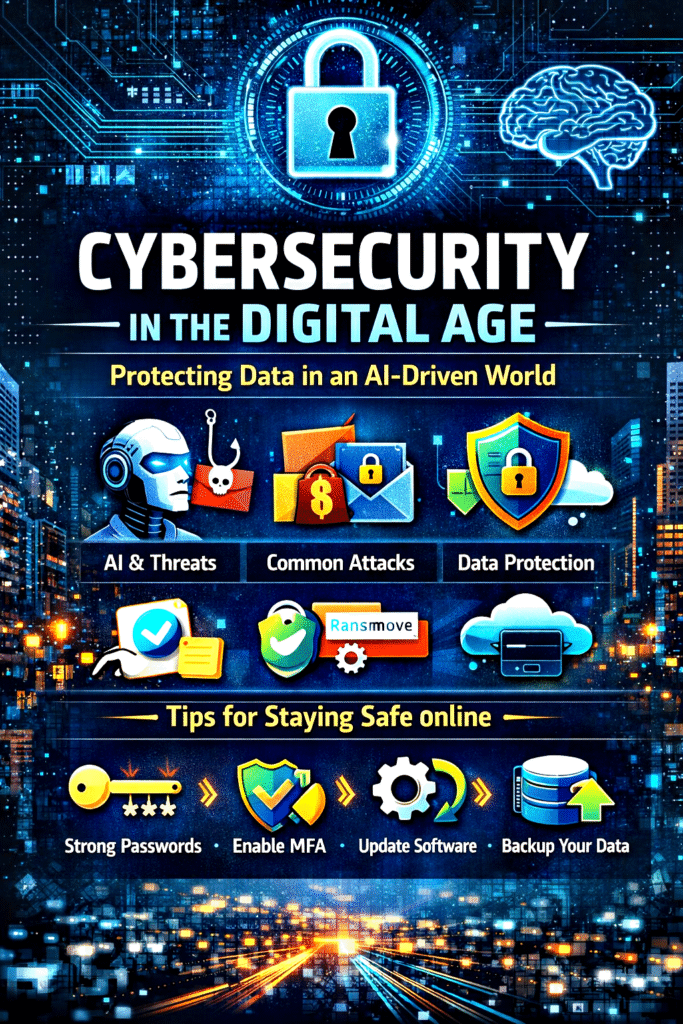
Cybersecurity in the Digital Age
In today’s hyper-connected world, technology is evolving faster than ever before. From smartphones and smart homes to cloud computing and artificial intelligence, digital transformation has reshaped how we live, work, and communicate. However, with this rapid advancement comes a growing concern—cybersecurity.
As our dependence on digital systems increases, so does the risk of cyber threats. In an AI-driven world, protecting sensitive data is no longer optional; it is a necessity. This article explores how cybersecurity is evolving, the threats we face, and the strategies needed to stay protected in the modern digital landscape.
1. The Expanding Digital Ecosystem
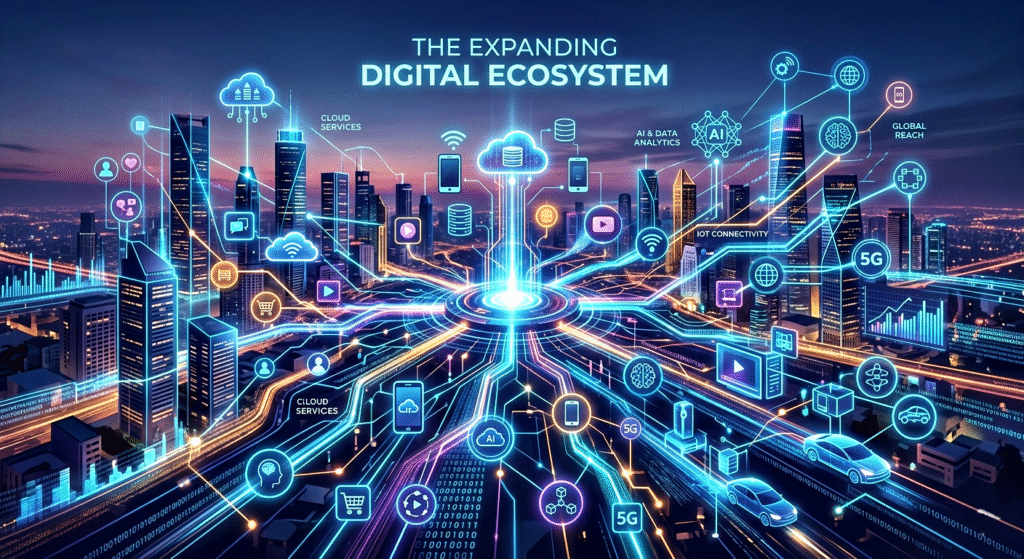
The digital ecosystem has grown rapidly over the past decade. Today, billions of devices are connected to the internet, forming a vast network of data exchange. This includes not only computers and smartphones but also everyday devices such as smart TVs, wearable devices, and home appliances.
Moreover, businesses are increasingly adopting cloud technologies and remote work environments. Data is now stored and accessed across multiple platforms rather than a single secure server. Although this improves accessibility and scalability, it also increases the complexity of managing security.
Another major factor is the explosion of data generation. Every online interaction—whether it’s browsing a website, making a purchase, or using social media—creates valuable data. Unfortunately, this data is highly attractive to cybercriminals.
As a result, the modern digital ecosystem is both an opportunity and a challenge. While it drives innovation, it also demands stronger and more sophisticated cybersecurity measures.
2. The Role of Artificial Intelligence in Cybersecurity
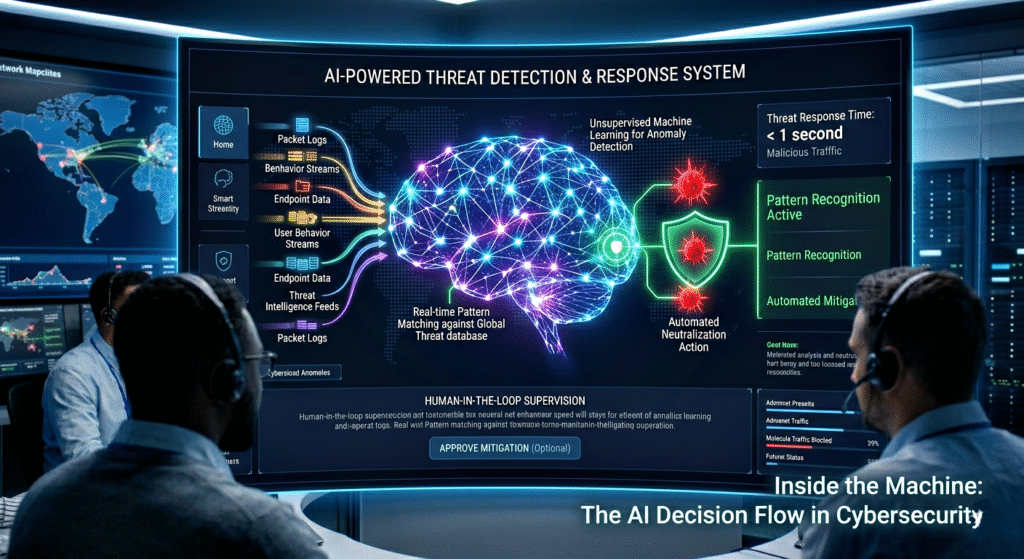
Artificial Intelligence (AI) is transforming cybersecurity by enabling faster and more accurate threat detection. Unlike traditional security systems that rely on predefined rules, AI can analyse large volumes of data in real time and identify unusual patterns.
One of the most significant advantages of AI is its ability to learn and adapt. Machine learning algorithms continuously improve by analysing past data. It allows them to detect even previously unknown threats. This makes AI a powerful tool in combating modern cyberattacks.
However, AI is not only used for defence—it is also being exploited by cybercriminals. Attackers are using AI to create more sophisticated phishing scams, automate attacks, and even generate deepfake content that can deceive individuals and organisations.
Despite these challenges, AI remains a cornerstone of modern cybersecurity. Its ability to process vast amounts of data and respond quickly makes it essential in an increasingly complex threat environment.
3. Common Cyber Threats in the AI Era
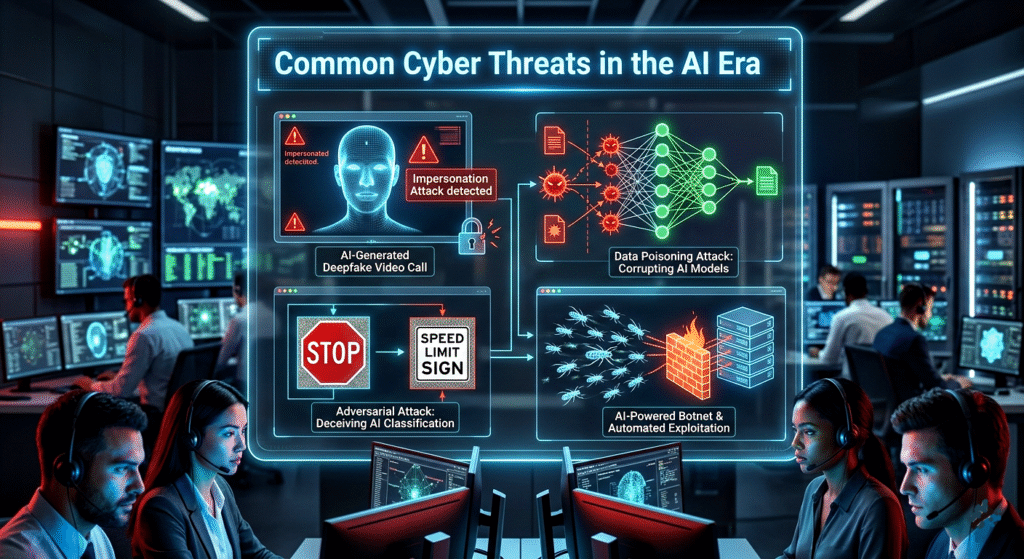
As technology evolves, cyber threats are becoming more advanced and harder to detect. Understanding these threats is crucial for both individuals and organisations.
Phishing attacks continue to be one of the most common threats. These attacks trick users into revealing sensitive information such as passwords or financial details. With AI, phishing messages have become more personalised and convincing.
Ransomware attacks are another major concern. In these attacks, hackers encrypt a victim’s data and demand payment for its release. AI has made ransomware more targeted and efficient, increasing its impact.
Data breaches are also a significant issue. Unauthorised access to sensitive information can lead to financial loss, identity theft, and reputational damage. In an AI-driven world, stolen data can be quickly analysed and exploited.
Deepfake technology is an emerging threat that uses AI to create realistic but fake audio and video content. This can be used for fraud, misinformation, or impersonation.
Additionally, Distributed Denial of Service (DDoS) attacks remain a serious problem. These attacks overwhelm systems with excessive traffic, causing them to crash or become unavailable.
The cyber threat landscape is constantly evolving, making it essential to stay informed and prepared.
4. Best Practices for Protecting Data
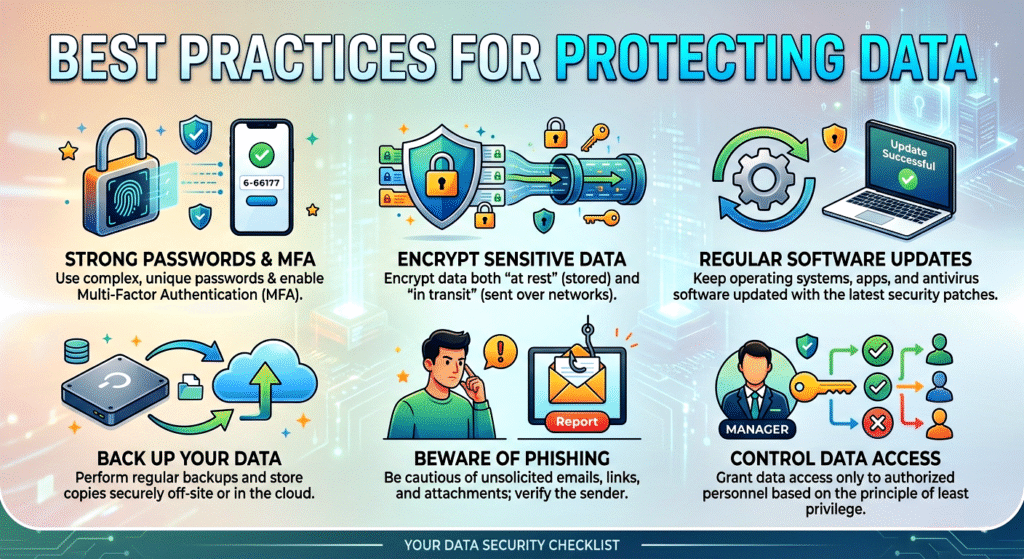
In the digital age, protecting data requires a proactive and multi-layered approach. Both individuals and organisations must adopt strong cybersecurity practices.
- One of the simplest yet most effective measures is using strong and unique passwords. Combining letters, numbers, and special characters makes passwords harder to crack. Multi-factor authentication adds an extra layer of security by requiring additional verification.
- Keeping software and systems updated is equally important. Updates often include security patches that fix vulnerabilities exploited by cybercriminals.
- Data encryption plays a crucial role in protecting sensitive information. Even if data is intercepted, encryption ensures that it cannot be easily read or misused.
- Access control is another key strategy. Limiting access to sensitive data based on roles reduces the risk of unauthorised exposure.
- User awareness is critical in preventing cyberattacks. Many attacks succeed due to human error, such as clicking on malicious links or downloading harmful files. Educating users about cybersecurity risks can significantly reduce these incidents.
Regular data backups are also essential. In case of a ransomware attack or system failure, backups allow data to be restored without significant loss.
By implementing these practices, individuals and organisations can strengthen their defences against cyber threats.
5. The Future of Cybersecurity
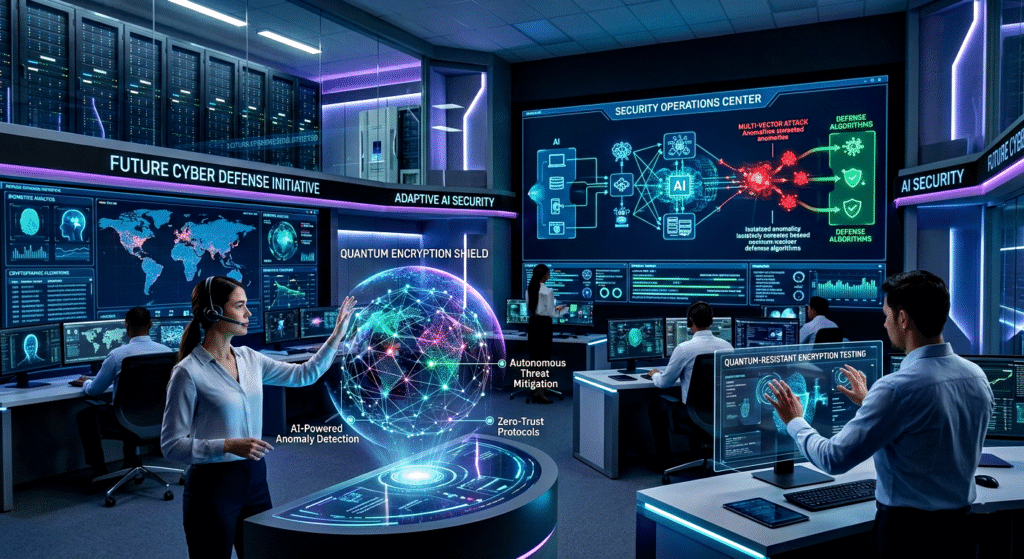
The future of cybersecurity will be shaped by continuous technological advancements. AI will play an even greater role in both defending against and enabling cyber threats.
One of the key trends is predictive cybersecurity. AI systems will be able to anticipate potential threats and take preventive action before an attack occurs. This shift from reactive to proactive security will be a major development.
Another important concept is “security by design,” where security measures are integrated into systems from the beginning rather than added later. This approach ensures stronger and more reliable protection.
Emerging technologies like quantum computing will also impact cybersecurity. While they offer immense potential, they may also challenge existing encryption methods, requiring new security solutions.
Collaboration will be essential in addressing future cyber threats. Governments, organisations, and individuals must work together to share information and develop effective strategies.
Ethical considerations will also become increasingly important. As AI continues to evolve, ensuring its responsible use will be critical in maintaining trust and security.
Conclusion
Cybersecurity in the digital age is more important than ever. As technology continues to evolve, so do the associated risks. In an AI-driven world, protecting data requires a combination of advanced technology, strong practices, and user awareness.
While challenges remain, the future of cybersecurity is promising. By embracing innovation and staying vigilant, we can create a safer and more secure digital environment for everyone.